The Sustainability of Birkenstock Cork: How Harvesting Supports Forest Ecosystems and Reduces Waste
By birkenstock | Published: 2026-06-18
Category: Industry News
Discover how Birkenstock's cork footbed harvesting promotes forest health, sequesters carbon, and minimizes waste, making sustainable footwear a reality without compromising comfort or style.
When you slip your feet into a pair of Birkenstock sandals or clogs, the first sensation is often the gentle cradle of the iconic cork footbed. That supple yet supportive layer isn't just a comfort marvel—it's a testament to decades of birkenstock sustainability. Unlike synthetic foams that linger in landfills for centuries, cork is a renewable, biodegradable material whose harvesting actually benefits the ecosystems where cork oak trees grow. In this deep dive, we'll explore how cork is sourced, why its environmental impact is remarkably positive, and how Birkenstock transforms this natural wonder into durable footwear while minimizing waste. Whether you're a longtime fan of the Arizona Suede Leather or curious about the Tokio Shearling Suede Leather for cooler months, understanding the cork beneath your feet adds a whole new layer of appreciation.
Where Does Birkenstock Cork Come From?
Birkenstock sources its cork primarily from the cork oak forests of Portugal and Spain, regions that together produce about 80% of the world's cork. These forests are not wild plantations; they are carefully managed ecosystems where cork oak trees (Quercus suber) live for 200–300 years. The bark is harvested by hand every nine to twelve years, a process that requires skill and precision to avoid damaging the tree's inner cambium layer. This sustainable cycle means a single tree can be harvested over a dozen times during its lifetime, providing a continuous supply of raw material without ever cutting the tree down.
The Environmental Upside of Cork Harvesting
Far from harming the trees, stripping cork bark actually stimulates new growth. The regenerated bark becomes thicker and more resilient with each harvest, and the tree's ability to absorb carbon dioxide actually increases after stripping. Cork oak forests are biodiversity hotspots, supporting species like the Iberian lynx, imperial eagles, and countless insects and plants. By maintaining demand for natural cork, Birkenstock helps preserve these habitats from being converted to agriculture or monoculture timber plantations. Each cork footbed effectively supports a living, breathing forest ecosystem.
Carbon Sequestration: Cork Is a Climate Champion
One of the most compelling arguments for sustainable footwear is its carbon footprint. Cork is a carbon-negative material at the point of harvest. Cork oak trees absorb CO₂ as they grow, and the harvested bark continues to store that carbon for decades—even centuries—when used in products like Birkenstock footbeds. Studies have shown that cork production emits far fewer greenhouse gases than synthetic alternatives like EVA foam or petroleum-based rubbers. Moreover, cork's natural cellular structure makes it lightweight and insulating, reducing energy use in transportation and helping regulate foot temperature year-round.
From Bark to Footbed: A Low-Waste Manufacturing Process
After cork bark is harvested and air-dried for several months, it is ground into granules and then mixed with natural latex binders to create the cork-latex compound that forms the heart of every Birkenstock footbed. This process generates remarkably little waste. Smaller cork particles that might otherwise be discarded are reused in other industries—think flooring, insulation, or even wine stoppers. Birkenstock also recycles its own production scraps: leftover cork trimmings and rejected footbeds are ground down and reintroduced into the manufacturing stream. This closed-loop approach means that very little raw cork ends up in a landfill.
Comparing Cork to Synthetic Footbed Materials
| Material | Source | Biodegradability | Carbon Impact | Lifespan (in footwear) |
|---|---|---|---|---|
| Birkenstock cork-latex | Renewable bark, natural latex | Biodegradable | Carbon-negative | 10–15+ years |
| EVA foam | Petroleum-based plastic | Non-biodegradable | High emissions | 2–5 years |
| Polyurethane | Petroleum-based plastic | Non-biodegradable | Moderate-high | 3–7 years |
| Natural rubber (pure) | Tree sap | Biodegradable | Low | 5–8 years |
As the table shows, cork outperforms synthetic alternatives across nearly every environmental metric. And because Birkenstock footbeds are replaceable, the leather uppers of styles like the Arizona Suede Leather can last for decades with proper care, further reducing waste.
Beyond the Footbed: Sustainability in the Whole Shoe
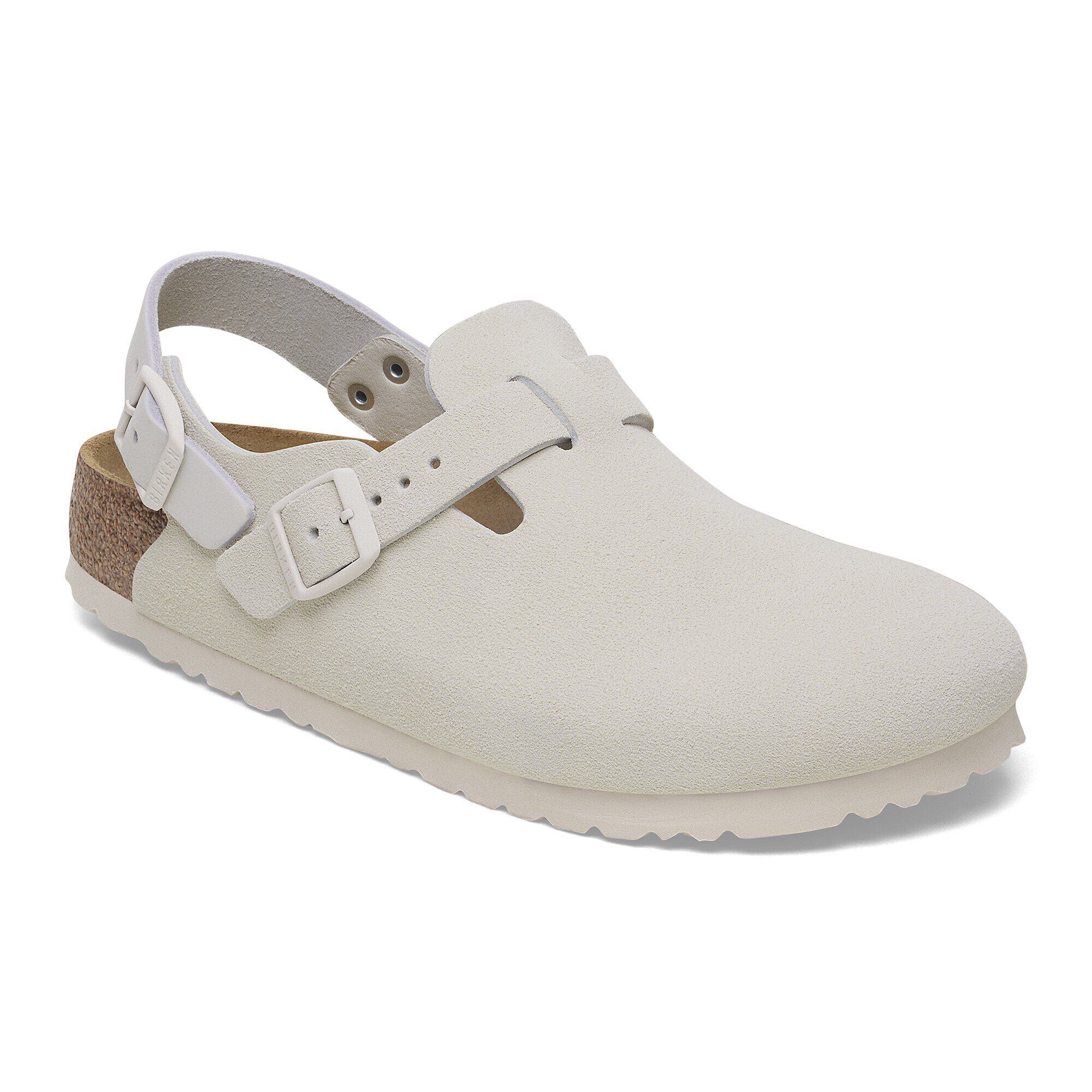
Birkenstock's commitment to sustainability extends well beyond cork. The brand uses vegetable-tanned leathers, recycled packaging, and water-based adhesives in many of its production processes. The Tokio Shearling Suede Leather combines luxurious shearling with the same eco-friendly cork footbed, proving that winter warmth doesn't have to come at the planet's expense. Even the buckles are made from nickel-free metal alloys that are durable and recyclable.
Reducing Waste Through Footbed Replacements
One of the most innovative aspects of Birkenstock's design philosophy is the replaceable footbed system. Instead of discarding an entire pair of shoes when the footbed wears out, you can simply have a new cork footbed fitted into the existing leather upper. This dramatically extends the product's lifespan and reduces the volume of waste sent to landfills. Many cobblers and Birkenstock retailers offer this service, making it a practical choice for environmentally conscious consumers.
How You Can Support Sustainable Footwear Choices
Choosing Birkenstock means voting for a system that values longevity over disposability. When you invest in a pair, you're supporting cork oak forests, reducing plastic dependency, and embracing a product designed to be repaired rather than replaced. To maximize your eco-impact, consider caring for your Birkenstocks properly: clean them with natural soaps, store them away from direct heat, and replace the footbed only when necessary. And when you're ready for a new style, explore options like the Tokio Shearling Suede Leather for cozy winter wear or the classic Arizona Suede Leather for everyday versatility.
Frequently Asked Questions About Birkenstock Sustainability
Is cork harvesting truly sustainable?
Yes. Cork oak bark regenerates naturally, and harvesting is done by hand on a 9–12 year cycle without harming the tree. These managed forests support rich biodiversity and store more carbon than unharvested forests.
Does Birkenstock use any synthetic materials?
Some Birkenstock styles incorporate synthetic uppers (like Birko-Flor) for water resistance or affordability, but the footbed remains cork-latex. The brand is gradually increasing its use of natural and recycled materials across all product lines.
Can I recycle my old Birkenstock footbeds?
Many Birkenstock retailers and recycling programs accept used cork footbeds. They can be ground down and repurposed into industrial products like insulation or floor underlayment. Check with your local store for take-back options.
How long does a Birkenstock cork footbed last?
With proper care, a cork footbed can last 10–15 years or more. The key is to avoid excessive moisture and heat, and to replace the footbed only when the cork begins to crumble or lose its shape.
Conclusion: Step Into a Greener Future
Birkenstock's cork footbed is more than a comfort icon—it's a model for eco-friendly manufacturing in the footwear industry. From the forests of Portugal to your closet, every step supports a circular economy that reduces waste, protects wildlife, and sequesters carbon. By choosing sustainable footwear from Birkenstock, you're not just treating your feet; you're contributing to a healthier planet. Ready to experience the difference? Explore the Tokio Shearling Suede Leather today and feel the comfort that comes from knowing your shoes are as kind to the Earth as they are to your feet.