How to Properly Measure Your Feet for Birkenstock Sandals and Shoes: A Complete Fit Guide
By birkenstock | Published: 2026-06-21
Category: How-to Guides
Learn how to accurately measure your feet for Birkenstock sandals and shoes. This step-by-step guide covers length, width, and arch support to ensure the perfect fit.
Getting the perfect fit for your Birkenstock sandals and shoes is essential for unlocking their legendary comfort and support. Unlike standard footwear, Birkenstocks are designed to mold to the unique contours of your feet over time, providing personalized arch support and alignment. But that magic only happens when you start with the right size and width. If you’ve ever wondered why your friend raves about their Birkenstocks while yours feel too tight or too loose, the answer almost always comes down to measurement. In this comprehensive guide, we’ll walk you through exactly how to measure your feet for Birkenstocks, interpret the brand’s unique sizing system, and avoid common fit mistakes. Whether you’re shopping for classic sandals, cozy clogs, or sporty sneakers, these tips will help you find your ideal match. By the end, you’ll be ready to confidently order your next pair and experience the difference that proper measurement makes.
Why Accurate Measurement Matters for Birkenstock Footwear
Birkenstock’s signature cork-latex footbed is engineered to support the natural shape of your foot, including the arch, heel, and toe bed. This design is fundamentally different from mass-produced shoes that rely on generic foam cushioning. If your foot is too long for the sandal, your toes may bump against the front edge; if it’s too short, your arch may not align with the footbed’s contour. Similarly, width plays a crucial role: a foot that is too wide for a narrow-width Birkenstock will spill over the sides, while a foot that is too narrow for a regular width will slide around. Measuring your feet correctly ensures that the footbed sits exactly where it should, allowing the cork to adapt to your foot’s pressure points over a break-in period of 1–2 weeks. This is why taking a few minutes to measure is the best investment you can make for long-term comfort.
Tools You’ll Need to Measure Your Feet
Before you start, gather the following items:
- A piece of paper larger than your foot (printer paper works but tape two sheets together if needed)
- A pencil or pen
- A ruler or measuring tape
- A straight edge (like a book or a piece of cardboard)
- Optional: a friend to help mark points accurately
It’s best to measure your feet at the end of the day, when they are slightly swollen from walking or standing. This ensures your Birkenstock size accommodates natural daily expansion. Also, wear the type of socks you plan to wear with your shoes — thin socks for sandals, thicker ones for boots or clogs.
Step-by-Step Guide to Measuring Foot Length
Step 1: Trace Your Foot
Place the paper on a hard, flat floor (not carpet). Sit in a chair with your foot firmly planted on the paper, and your weight evenly distributed. Hold the pencil vertically against your foot — not angled inward — and trace the outline of your entire foot. Keep the pencil as close to the skin as possible without pressing into it. Repeat for the other foot, as many people have one foot slightly larger.
Step 2: Mark the Heel and Longest Toe
Using a straight edge, draw a straight line at the back of the heel (the roundest part) and another at the tip of your longest toe. For most people, the longest toe is the big toe, but some have a longer second toe (Morton’s foot). Use whichever toe extends farthest.
Step 3: Measure the Distance
Measure the distance between the two lines in centimeters (or inches) using a ruler. This is your foot length. Record both feet and use the longer measurement for sizing.
Step-by-Step Guide to Measuring Foot Width
Birkenstock offers two width options for most styles: “Regular” (medium) and “Narrow” (slim). Getting width right is just as important as length, because the footbed’s arch support and toe grip rely on a snug but not tight fit.
Step 1: Mark the Widest Points
On your foot tracing, identify the widest part of the ball of your foot — usually just behind the toes. Draw a vertical line at that point on both sides of the outline.
Step 2: Measure the Width
Measure the distance between the two vertical lines. This is your foot width. Compare it to Birkenstock’s width guidelines (typically: Regular width accommodates up to 10.5 cm for size 38, with adjustments for other sizes; Narrow width is about 1 cm less). For the most accurate conversion, consult the Birkenstock size chart on the product page.
Understanding Birkenstock Sizing: Length and Width Charts
Birkenstock uses European sizing (EU) for length, and each size has a corresponding foot length range. For example, a EU 38 typically fits a foot length of 24.0–24.5 cm. Width is indicated by the symbol on the footbed: a solid footprint icon means Regular width, while a hollow footprint icon means Narrow width. Most Birkenstock sandals and shoes are available in both widths, but some styles — like the Arizona Suede Leather — come in multiple width options, so check the product listing. For closed-toe styles like the Boston Crosstown Waxy Leather, width is even more critical because the toe box is enclosed. If you are between sizes, Birkenstock generally recommends sizing up, especially for sandals, as the toe bar and heel cup are fixed.
How to Interpret the Birkenstock Footbed Markings
Flip your Birkenstock over, and you’ll see a series of numbers and symbols embossed on the cork. The first number is the EU size (e.g., 38). Next to it, you may see a “N” for Narrow or “R” for Regular. Some older models use “G” for Regular (German: “Grundform”). The last number is the width code in millimeters (e.g., 90 mm). This is a helpful reference when buying a second pair, as you can verify the exact dimensions. For example, if you love the fit of your Florida Fresh Nubuck Leather sandals, you can check the footbed markings to order the same size in another style.
Common Fit Mistakes and How to Avoid Them
- Choosing the wrong width: If your foot spills over the edges of the sandal, it’s too narrow. If your foot slides forward and your toes hit the front, it’s too wide. Always measure both length and width.
- Ignoring arch alignment: Your arch should feel supported, not pressured. If the arch support sits too far forward or backward, the size is wrong.
- Relying on your usual shoe size: Birkenstock sizing is unique. A woman who wears a US size 8 might wear a EU 38 or 39, depending on foot shape. Never assume — always measure.
- Not measuring both feet: Asymmetry is normal. Fit the larger foot, and use insoles or adjustments for the smaller one if needed.
Special Considerations for Different Birkenstock Styles
Sandals
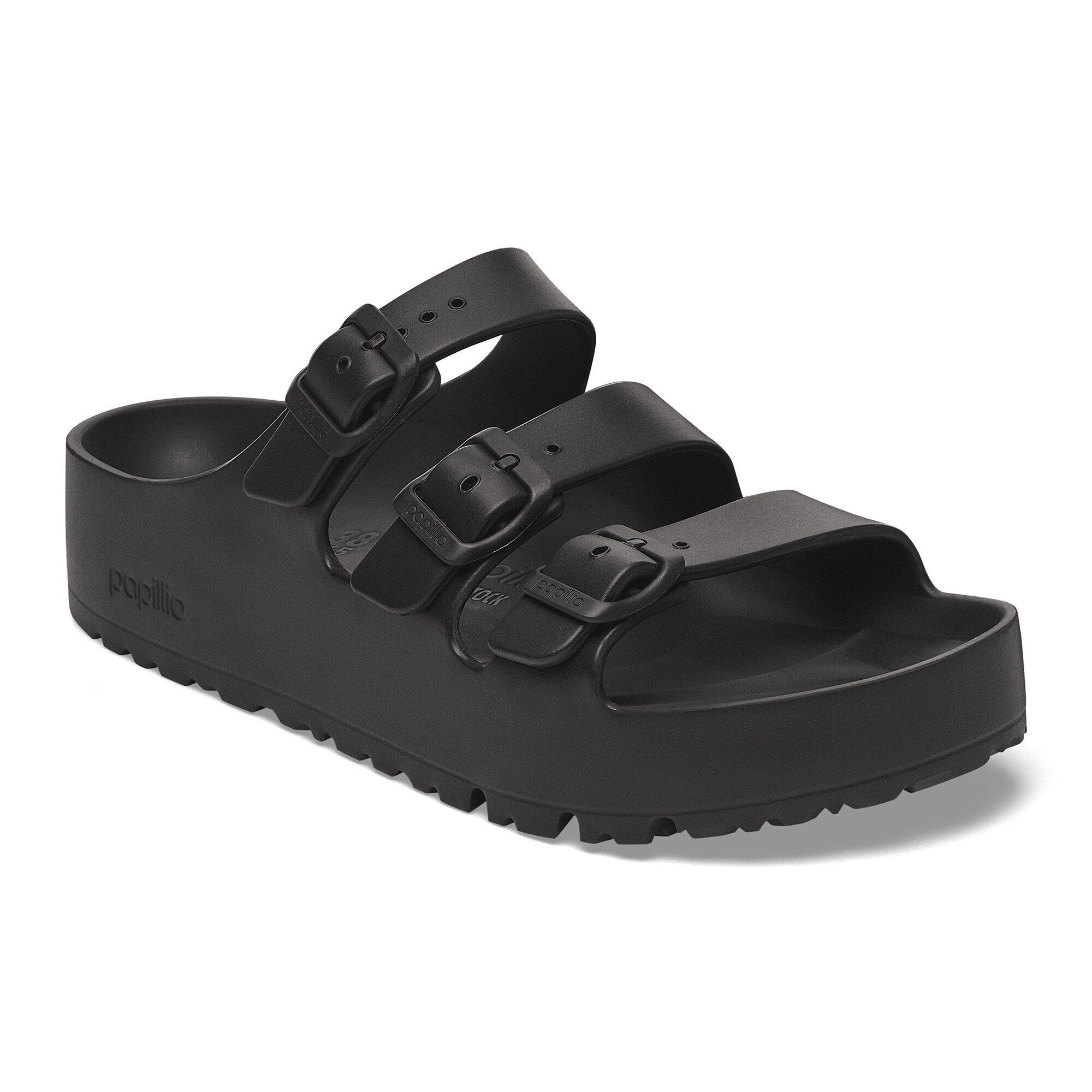
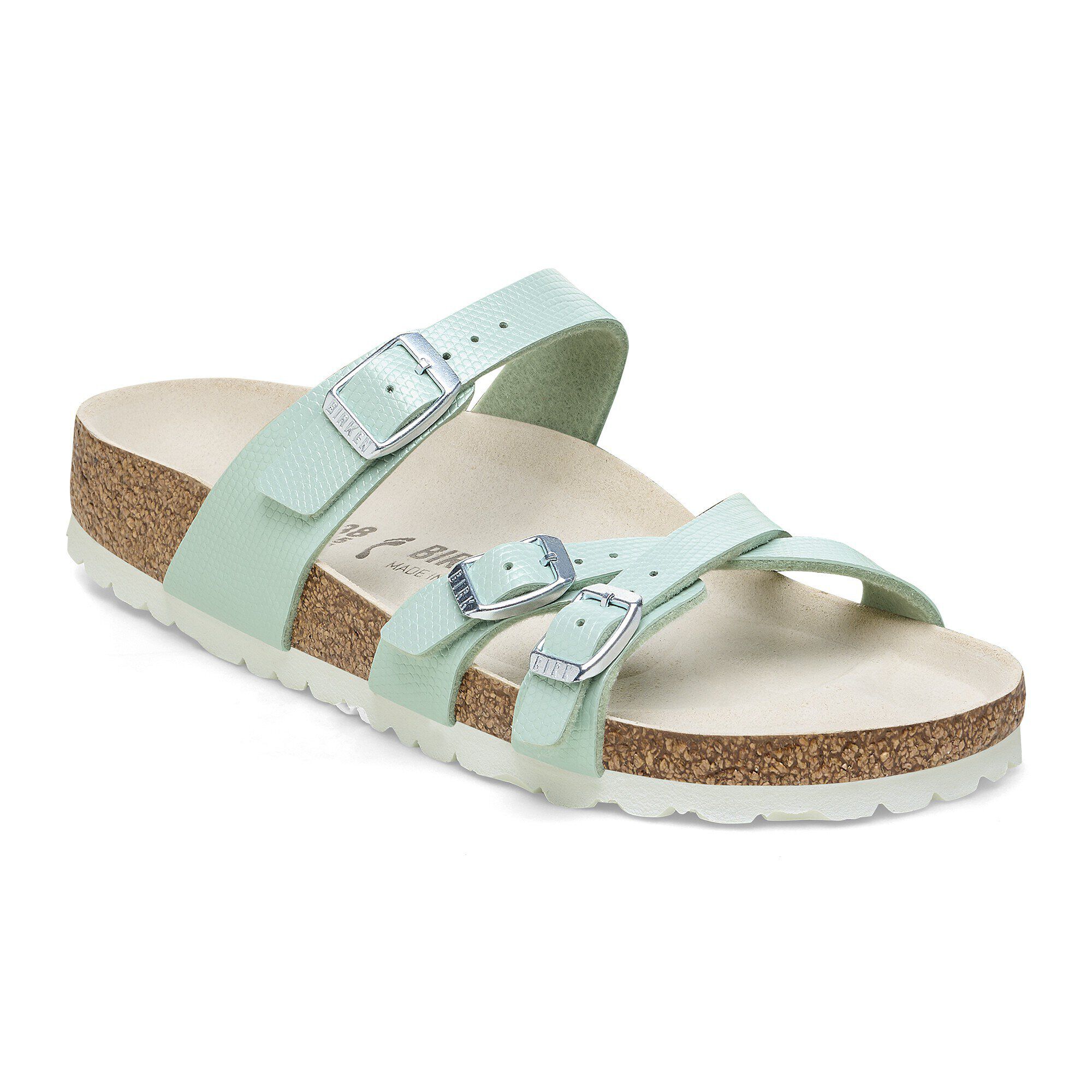
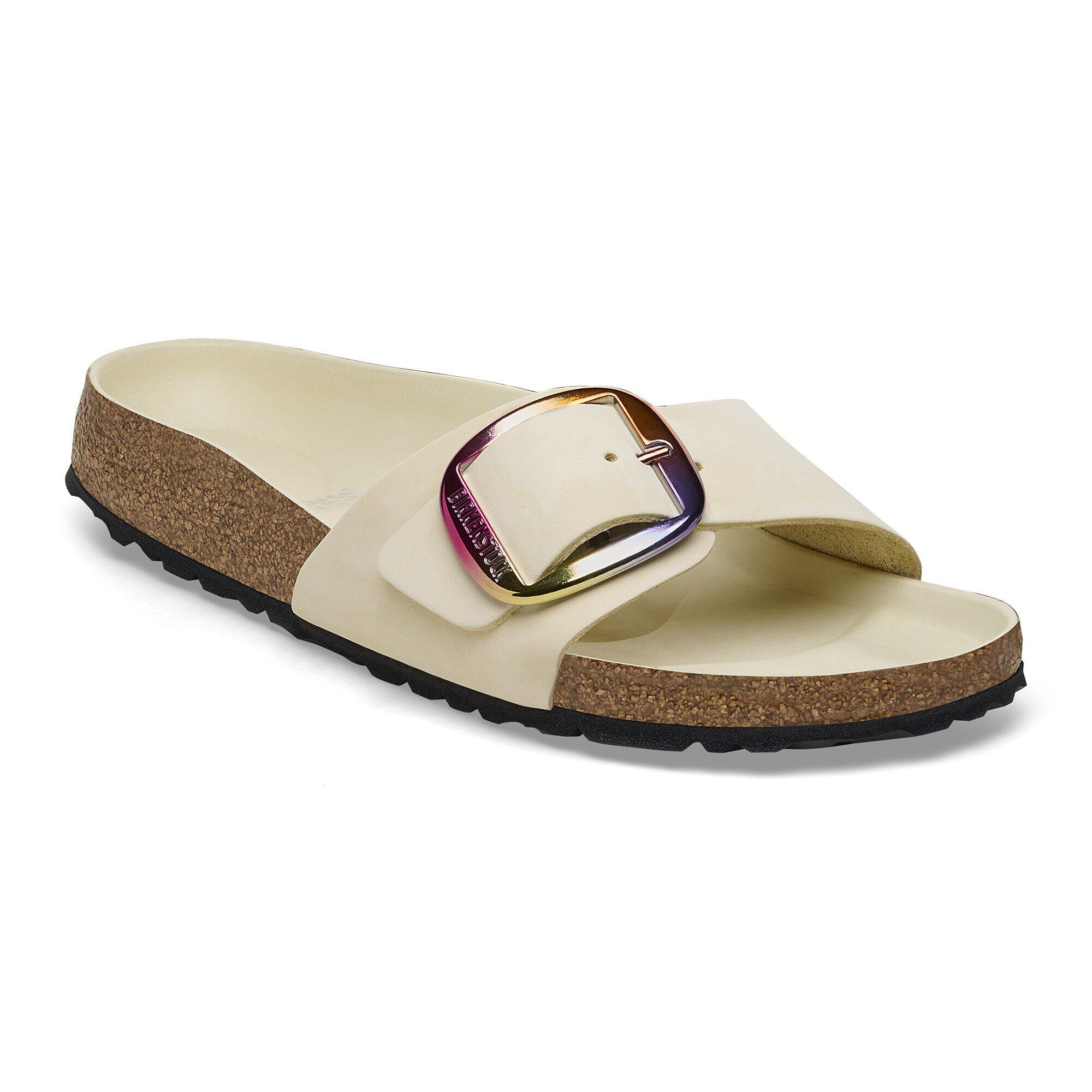
Open-toe sandals like the Arizona or Florida allow a bit more forgiveness in length, but the toe bar must sit just behind your toes. If your toes constantly grip the edge, size up. For a classic style like the Highwood Slip On Mid Women Nubuck Leather (a boot-like silhouette), the fit is more closed, so precise length is critical.
Clogs and Shoes
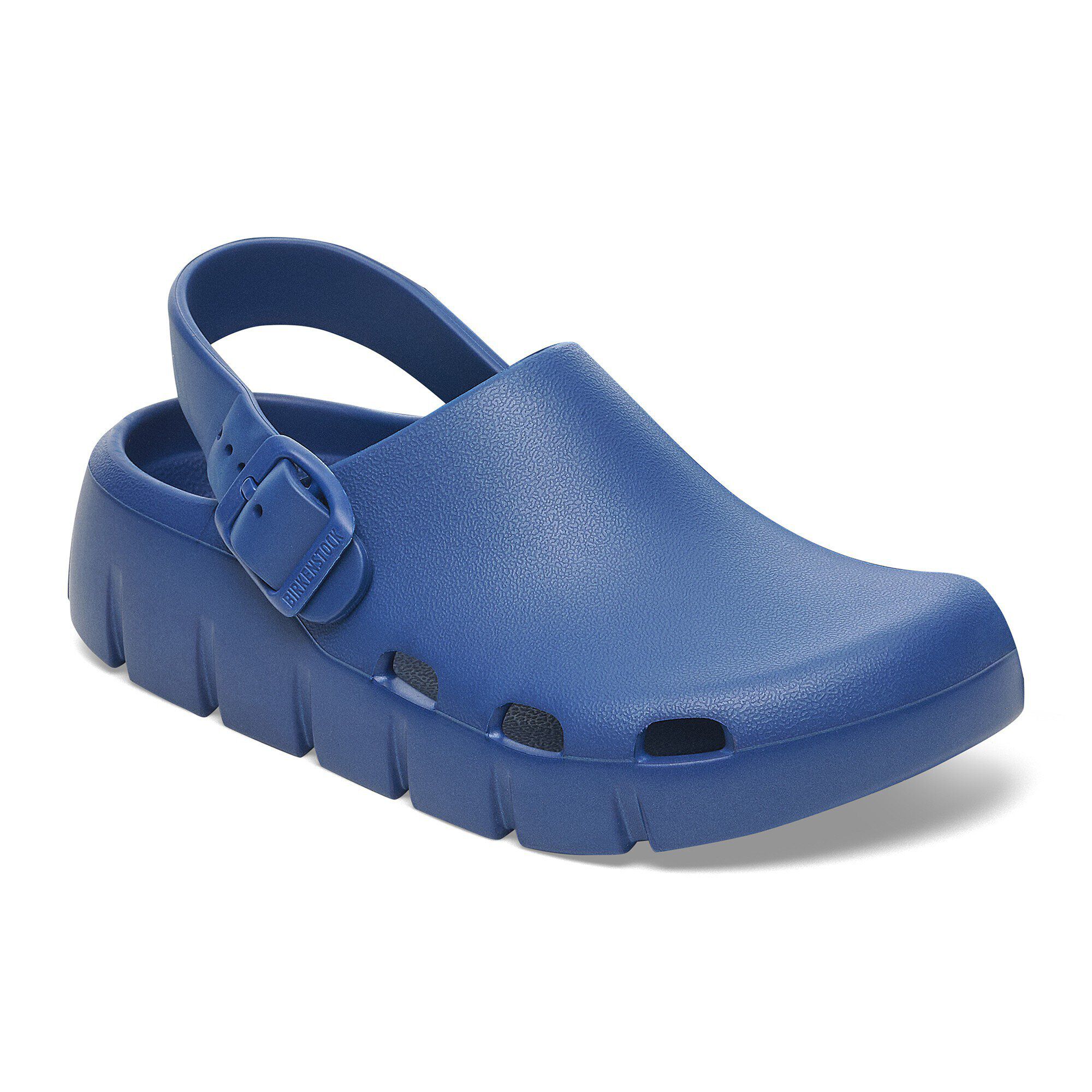
Closed-toe Birkenstocks such as the Boston or Tokio require extra attention to width because the upper material (leather or suede) will stretch slightly over time but cannot expand indefinitely. If your foot feels cramped width-wise, choose the Regular width. For the Tokio Suede Leather clog, remember that the heel strap adds adjustability, but the toe box must still have adequate room.
Boots and Sneakers
For Birkenstock boots and sneakers, wear the socks you intend to use while measuring. Also consider that some styles have removable insoles for custom orthotics, which can affect fit. If you plan to use thick socks, you may need to size up by half a size.
Using the Birkenstock Size Chart Online
Most product pages on the Birkenstock website include a dedicated size chart with length and width conversions. Input your foot length in centimeters and compare it to the chart. For example, a foot length of 24.5 cm corresponds to EU 38.5 (Regular width for that size is typically 90–92 mm wide at the ball). Keep in mind that charts are averages, and your foot shape (high arch, wide forefoot) may require adjustments. If you’re between sizes, read reviews for the specific style, as some models run slightly larger or smaller.
How to Test Fit When Your Birkenstocks Arrive
Once your Birkenstocks arrive, try them on in the afternoon. Walk around on a clean, hard floor for a few minutes. Check for the following:
- Toe room: You should have about 5–10 mm (a thumb’s width) between your longest toe and the front edge of the footbed.
- Heel cup: Your heel should sit snugly in the cup without slipping out when you walk.
- Arch support: The arch should feel supportive, not painful. It may feel pronounced at first but will soften as the cork molds.
- Width: The edges of your foot should not spill over the sides. If they do, swap for a wider width.
Remember, Birkenstocks have a break-in period. If the fit is slightly snug but not painful, it’s likely correct. Leather styles may stretch a little; synthetic materials will not. If in doubt, consult the brand’s return policy.
Final Tips for Long-Term Comfort
Proper measurement is the foundation of Birkenstock comfort, but the journey doesn’t end there. Rotate your Birkenstocks to allow the cork to dry between wears, use a cork sealer to maintain the footbed, and avoid getting them wet unless they are Water Friendly styles. With the right fit and care, your Birkenstocks will last for years, providing unmatched support for every step.
Ready to find your perfect pair? Start by measuring your feet using the steps above, then explore our collection. The Florida Fresh Nubuck Leather is a versatile choice for warm weather, offering a classic three-strap design that adjusts to your foot shape. Or, if you prefer a closed-toe option with a refined look, the Boston Crosstown Waxy Leather clog combines durability with timeless style. No matter which you choose, accurate sizing will ensure you enjoy the legendary comfort Birkenstock is known for.